





Why Do Leggings Roll Down? Fix Your Legging Fit
- by Admin
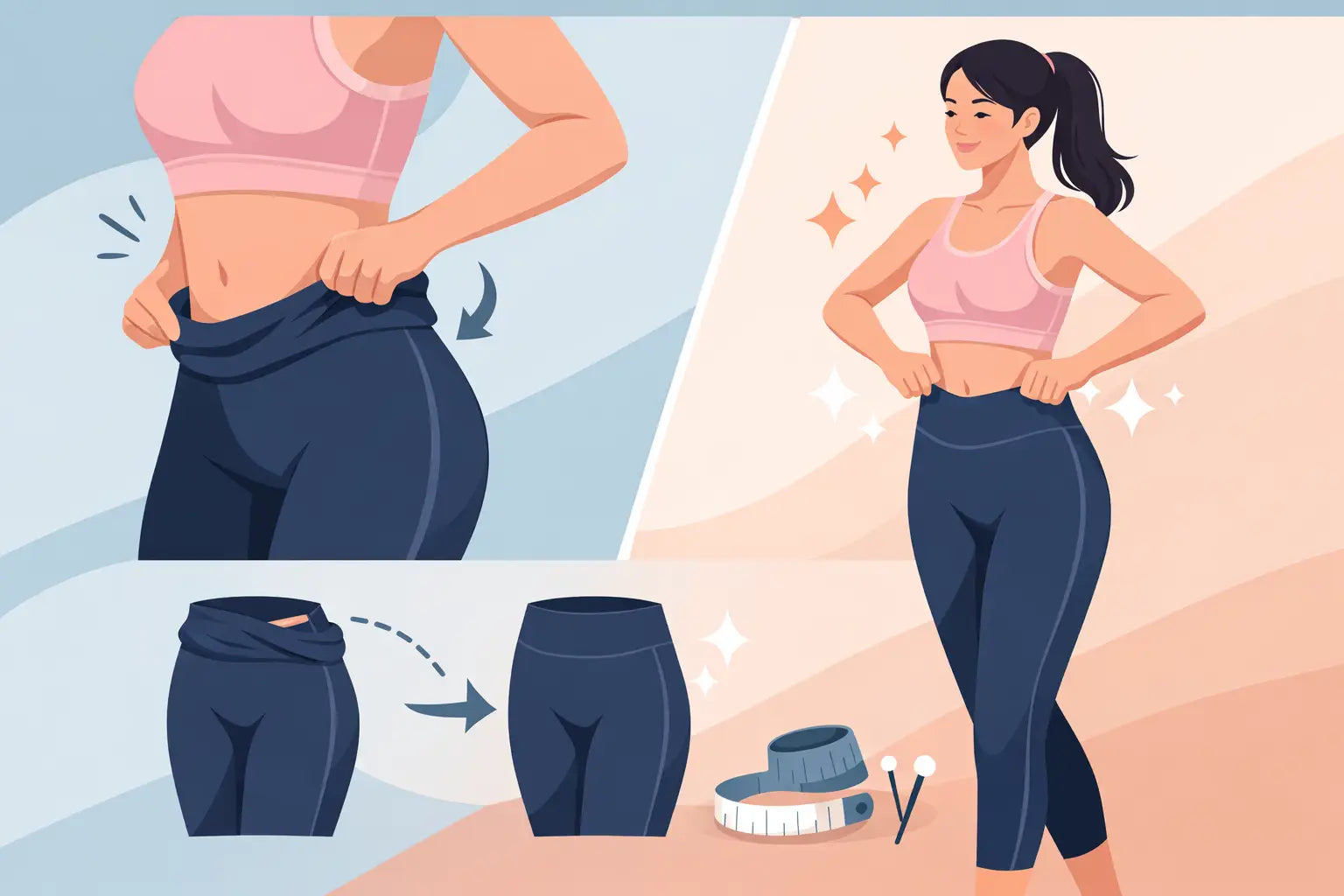
You are halfway through a squat set, a Pilates flow or the walk from the coffee shop to the car, and suddenly you are hitching up your waistband again. So, why do leggings roll down? Usually, it is not one single issue. It is the relationship between fit, fabric, waistband construction and how you move.
Great leggings should feel sculpting, secure and flattering without asking for constant attention. If yours slide, fold or bunch at the waist, this is how to work out what is happening and find a fit that stays beautifully in place.
Why Do Leggings Roll Down During Workouts?
Leggings roll down when the waistband cannot hold its position against your body as you bend, stretch, run or sit. Sometimes it slips gradually. Sometimes it folds over at the front the moment you move. Both can be frustrating, especially when the rest of the legging looks like the perfect match.
The most common cause is a size or shape mismatch. A waistband that is too large has nothing to anchor it, so it travels down towards the widest point of your hips. One that is too small can also roll, because the fabric is stretched beyond its intended recovery and the waistband compresses, folds and works its way downward.
Your proportions matter just as much as the size on the label. If you have a defined waist and fuller hips, a straight-cut waistband may fit your hips but gape at the waist. If your torso is shorter, an extra-high rise may end at a point where your body naturally bends, creating a roll rather than a smooth finish. The right rise is personal, not a one-style-fits-all rule.
Movement exposes weak fit fast. Deep squats, deadlifts and reformer Pilates all flex the torso repeatedly. Running adds impact and stride. Even a long day of sitting can encourage a soft, unsupported waistband to bunch. That is why leggings that feel fine in the changing room can behave very differently during a proper workout.
The Fit Signs You Should Not Ignore
A secure waistband should lie flat and feel comfortably close to the body. It should not dig in, pinch your breathing or require you to pull it upwards every few minutes. The aim is held-in confidence, not a waistband that feels like a restriction.
Check the fit before you remove the tags. Walk around, sit down, lift one knee, do a few bodyweight squats and reach overhead. Notice whether the waistband stays level or starts to curl at the front. A small adjustment once in a while is normal. Repeated pulling is a sign that the cut, size or fabric is not doing its job.
There are a few useful clues to separate a too-small fit from a too-large one:
- If the waistband digs in, creates a pronounced roll and feels uncomfortable when seated, try sizing up or choosing a softer, wider waistband.
- If the waist gaps, slides down evenly and leaves you constantly pulling the leggings higher, you may need a smaller size or a more contoured waist.
- If the legs feel perfect but the waist moves, look for a style designed with a curved, high-rise waistband rather than simply sizing down.
- If the leggings only slip once you sweat, the issue is often fabric grip, finish or a waistband with too little structure.
Waistband Design Makes the Difference
Not all high-waisted leggings are created equal. Height alone does not guarantee hold. The best fitting leggings combine a rise that suits your torso with a waistband engineered to stay flat through movement.
A wider waistband spreads support across a larger area, reducing the chance of it digging into one narrow line and folding. A double-layered construction can add structure, while a carefully placed seam helps the fabric follow the natural curve between waist and hip. When it fits correctly, a high waist feels secure and smoothing without becoming stiff.
Be mindful of waistbands with a very thin elastic strip at the top. They can feel tight initially but may create a pressure point that encourages rolling, particularly during seated exercise or high-rep core work. Equally, a waistband with no internal support at all may feel wonderfully soft for lounging yet lack the hold needed for HIIT or running.
Seams also matter. A front seam is not automatically a problem, but a waistband that has been poorly cut or stitched can twist as you move. If the roll always starts at one side or at the front centre, inspect whether the waistband is lying evenly when you put it on. A quality construction should feel balanced from the first wear.
Fabric Recovery Is More Than a Comfort Detail
Leggings need stretch, but they also need recovery. Stretch lets you lunge, squat and move freely. Recovery is what brings the fabric back to shape afterwards, so the waistband continues to hug the body rather than loosening over the session.
Cheap or tired fabrics can feel soft at first touch but lose their hold after an hour, especially in heat or humidity. A premium performance fabric with four-way stretch and strong recovery is designed to move with you and return to its original form. This is the difference between leggings that look good when you leave the house and leggings that still feel sculpting after your workout.
Fabric weight is a trade-off. Ultra-light styles can be brilliant for low-impact training and warm weather, but they may offer less compression and waistband stability. A slightly more substantial, squatproof fabric can deliver a smoother, more supported finish for gym sessions, although personal comfort and climate still count.
Supplex-style performance fabrics are loved for their cotton-soft feel with activewear-level stretch and support. The key is that the fabric should feel smooth, opaque and flexible without becoming flimsy when stretched. If you can see excessive whitening across the waistband when you move, the size may be too small or the fabric may not have enough density for the support you want.
Could Washing Be Causing Your Leggings to Slip?
Yes. Even a beautifully fitting pair can lose some of its recovery when it is washed or dried harshly. High heat is particularly unforgiving on elastic fibres, which are responsible for the close, springy feel that keeps a waistband in place.
Wash leggings inside out on a cool, gentle cycle and avoid fabric conditioner. Conditioner can coat technical fibres, affecting their moisture-wicking performance and sometimes leaving the fabric feeling less responsive. Skip the tumble dryer where possible and let them air dry away from direct heat.
It is also worth rotating your activewear. Wearing and washing the same pair several times a week puts more strain on the fibres than sharing the workload across a few favourites. When a waistband begins to feel noticeably looser than it did when new, no amount of pulling it higher will restore its original support.
How to Stop Leggings Rolling Down
Start with the waistband, not just the size. Choose a rise that reaches a comfortable, stable point on your torso and a design that follows the waist-to-hip curve. For many women, a supportive high-rise style with a wide, double-layered waistband is the sweet spot for training and all-day wear.
Then match your leggings to the activity. For a strength session, run or high-energy class, prioritise sculpting fabric with dependable recovery. For yoga, gentle walks or lounging, you might prefer a softer finish, but still choose a waistband that does not collapse when you fold forward.
Put leggings on fully before judging the fit. Pull the fabric gradually up from the ankles, smoothing it over the calves and thighs before settling the waistband at your natural waist. If you grab the waist and haul everything upwards in one go, you can leave extra fabric bunched around the legs, which can pull down as you move.
A polished fit should give you freedom to focus on your form, your pace and your plans after the gym. Toned Totty leggings are designed to bring that sculpted, squatproof confidence to the studio, the street and everywhere in between.
Your body is not the problem when leggings will not stay up. The right pair should work with your shape, not ask you to shrink, squeeze or constantly adjust. Find the rise, fabric and waistband that feel secure on your body, and let your activewear keep up with every move.


