What to Wear Pilates Class for Style and Support
- by Admin
That awkward moment before your first session usually has nothing to do with the reformer. It is the outfit. If you are wondering what to wear pilates class, the answer is simple: choose pieces that move with you, stay put through every stretch, and make you feel polished the second you walk into the studio.
Pilates is low impact, but your kit still matters. You are bending, lengthening, rolling, lifting and holding controlled positions where poor fit becomes very obvious, very quickly. The right outfit should feel smooth, sculpting and distraction-free. Think support without restriction, coverage without bulk, and a look that feels as elevated as the workout itself.
What to wear Pilates class really comes down to fit
Pilates is not the place for fussy layers, slipping straps or leggings you need to tug up every five minutes. Whether you are on a mat or reformer, fitted activewear is the smartest choice because your instructor needs to see your alignment, and you need clothing that follows your body instead of fighting it.
High-waisted leggings are usually the hero piece. They offer coverage when you are lying back, folding forward or moving through slower, controlled sequences. A sculpting fit can also make a real difference to confidence, especially if you prefer gym wear that smooths and supports rather than just covers. Opaque fabric is non-negotiable. Pilates involves enough bending and stretching that anything less than squatproof can leave you feeling self-conscious.
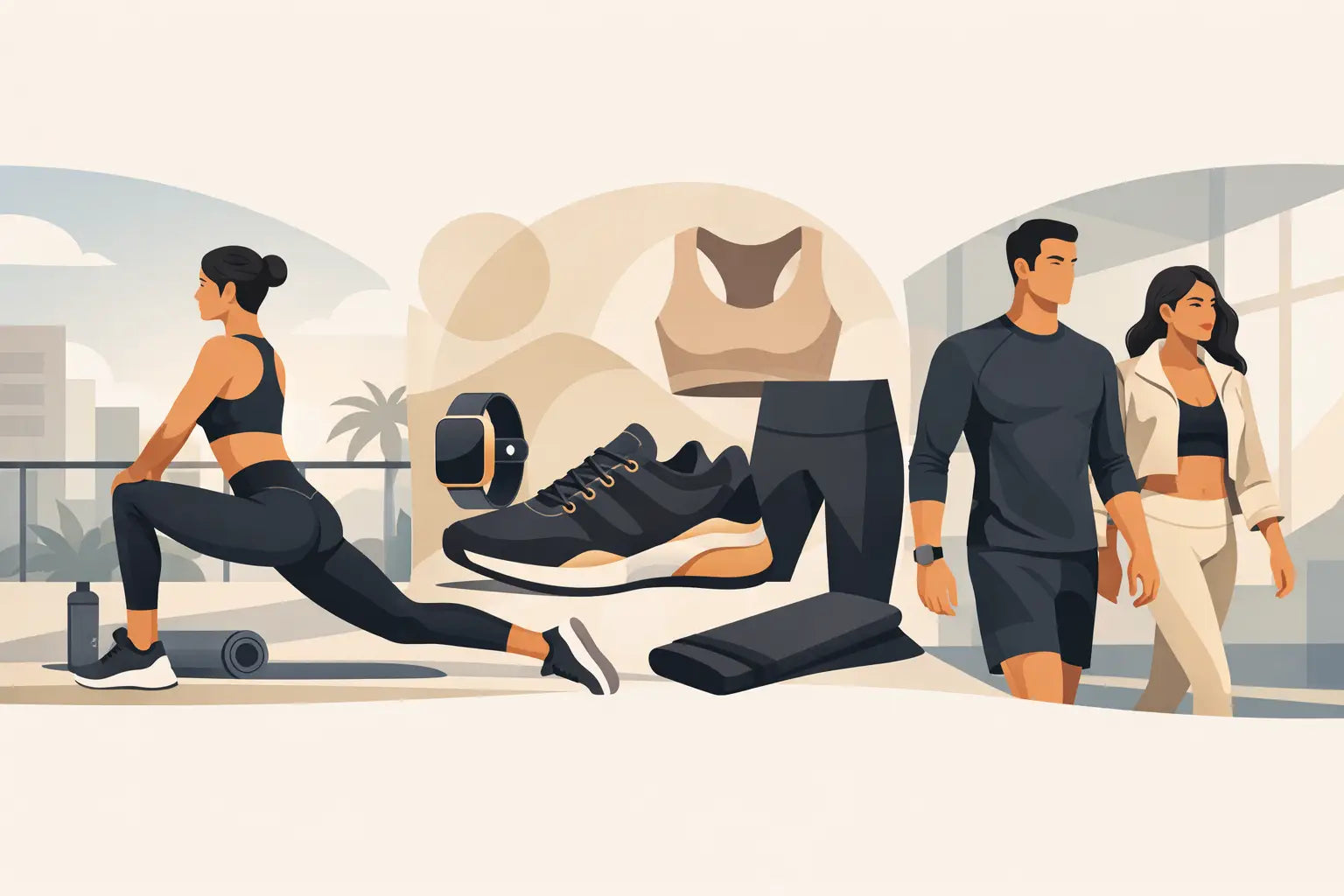
For the top half, a supportive sports bra or a streamlined fitted top works best. You do not usually need maximum-impact support for Pilates, but you do want enough hold to feel secure through planks, bridges and core work. If you love a layered look, keep it close-fitting. A sleek long-sleeve top, a cropped zip jacket or a second-skin vest keeps the silhouette clean and the outfit studio-appropriate.
The best leggings for Pilates
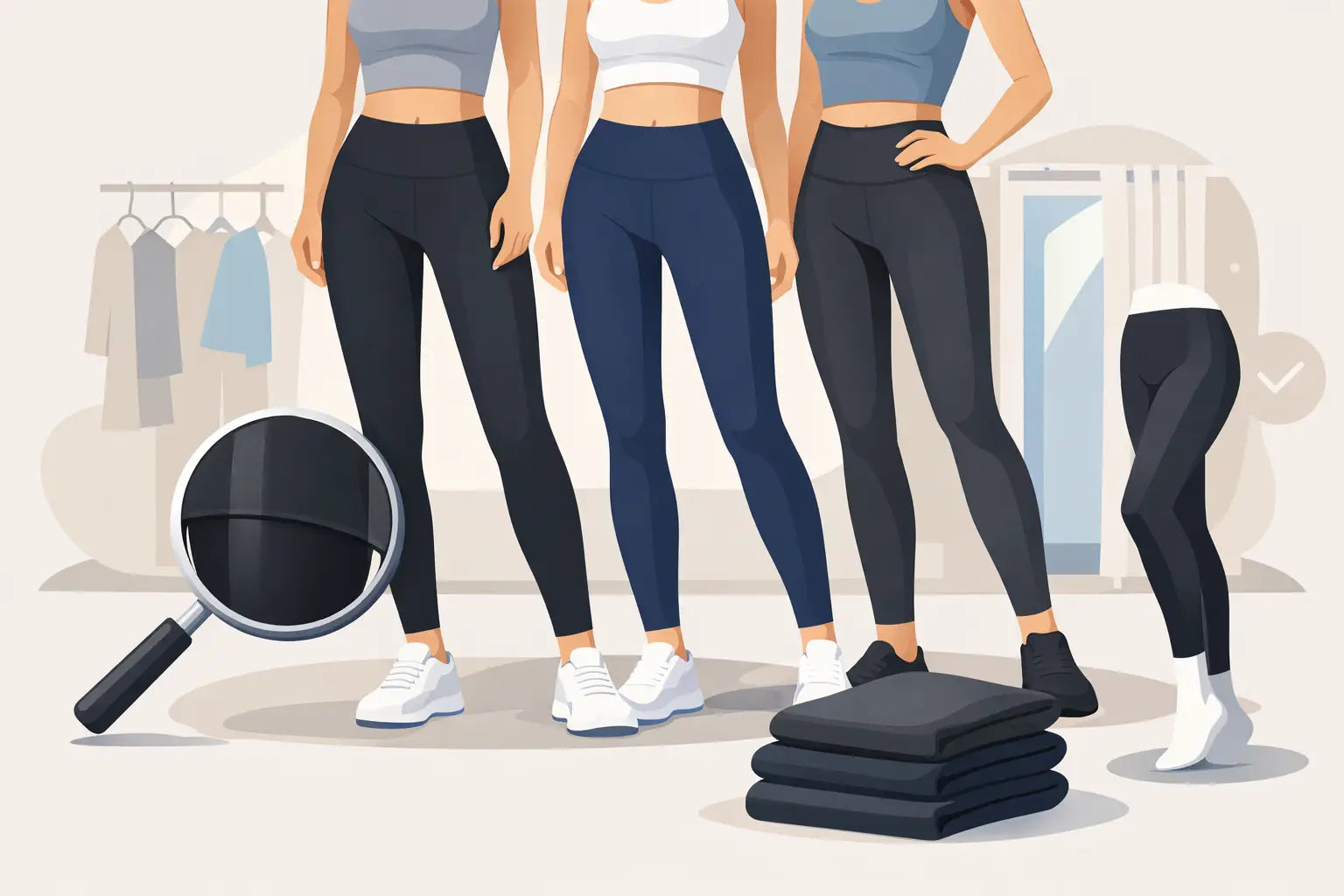
Leggings are where comfort and style either meet beautifully or fall apart fast. For Pilates, the best pairs are soft, sculpting and high rise, with enough stretch to move through every position without going sheer.
A compressive fabric can be brilliant if you like a held-in feel, but there is a balance. Too much compression can feel restrictive when you are curling through the spine or working into deep stretches. Too little, and you lose that secure, flattering finish that makes premium activewear worth it. Ideally, look for leggings that contour the waist, stay in place and feel smooth against the skin.
Length is mostly personal preference. Full-length leggings create a polished look and work well in cooler studios. Seven-eighths styles can feel slightly lighter and are often the easiest all-rounder. Shorts are less common for Pilates, especially in the UK, unless you run hot or are heading to a heated class. If you do wear shorts, choose a fitted pair that will not ride up or distract you.
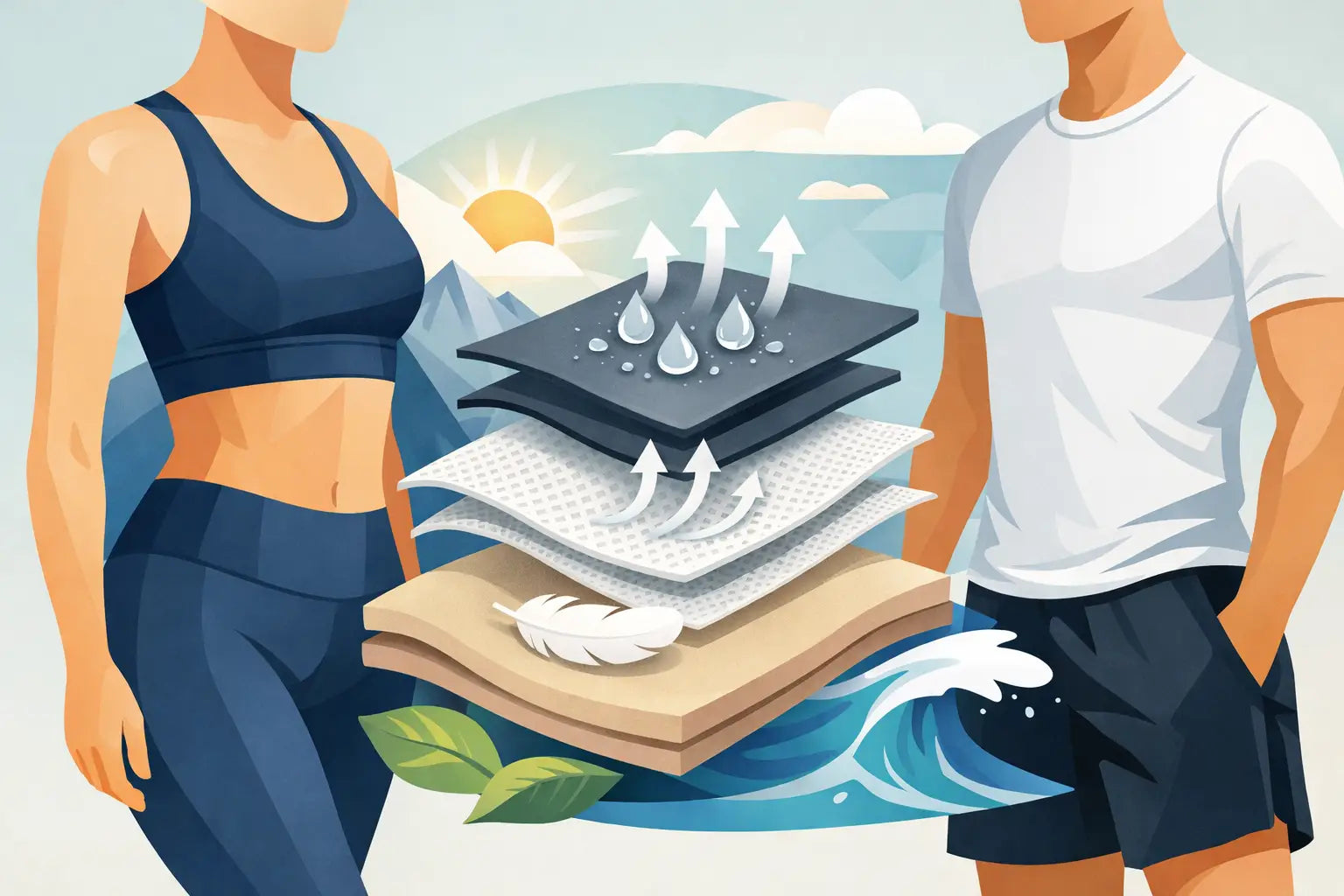
Fabric matters just as much as fit. Soft-touch technical fabrics with four-way stretch usually perform best because they keep their shape while still allowing full movement. Premium materials also tend to sit better on the body, which is exactly what you want in a workout built around precision.
What tops work best for Pilates?
The best Pilates tops are the ones you forget you are wearing. That means no digging seams, no loose hems falling over your face in tabletop, and no necklines you keep adjusting between exercises.
A fitted vest, crop top or lightly supportive sports bra is often perfect for mat classes. These styles keep everything streamlined and let you move freely without excess fabric getting in the way. If you prefer more coverage, a body-skimming short-sleeve or long-sleeve top is a strong option. It gives you a bit more confidence while still keeping your shape visible for form corrections.
There is also a style angle here. Pilates wear tends to lean cleaner and more refined than some gym looks, which is why matching sets work so well. Coordinated leggings and a bra or fitted top create that put-together, luxe finish that feels just as right grabbing a coffee afterwards as it does in the studio.
Sports bras: how much support do you need?
Pilates does not usually demand the same level of support as running or HIIT, but that does not mean any old bra will do. You still want a secure fit that stays comfortable through movement, especially in exercises where you are lying on your back, twisting or lifting through the core.
For smaller busts, light to medium support is often enough. For fuller busts, medium support tends to feel better even in lower-impact classes, simply because it adds confidence and reduces distraction. The key is comfort. If a bra digs in, shifts around or feels too structured, it can take the focus out of your workout.
A flattering cut also matters. Pilates style is part performance, part polish. A well-designed sports bra that shapes beautifully can carry your whole outfit, especially if you are pairing it with high-waisted leggings and a light outer layer.
Layers for before and after class
The easiest Pilates outfits are the ones that work beyond the studio. That is where lightweight layers come in. A fitted jacket, cropped sweatshirt or soft wrap layer gives you warmth on the way in, looks chic post-class and keeps your outfit feeling complete.
This is especially useful if you are heading straight to errands, brunch or the school run. Pilates wear should not feel like a costume change. It should fit into the rest of your day with the same ease as the workout itself. That gym-to-street versatility is exactly why premium activewear has become such a wardrobe staple.
Just keep the layer practical. Anything oversized can work before and after class, but for the workout itself, closer-fitting pieces are usually better. Loose drawstrings, bulky pockets and heavy fabrics are not ideal once you are moving.
Socks, shoes and the small details people forget
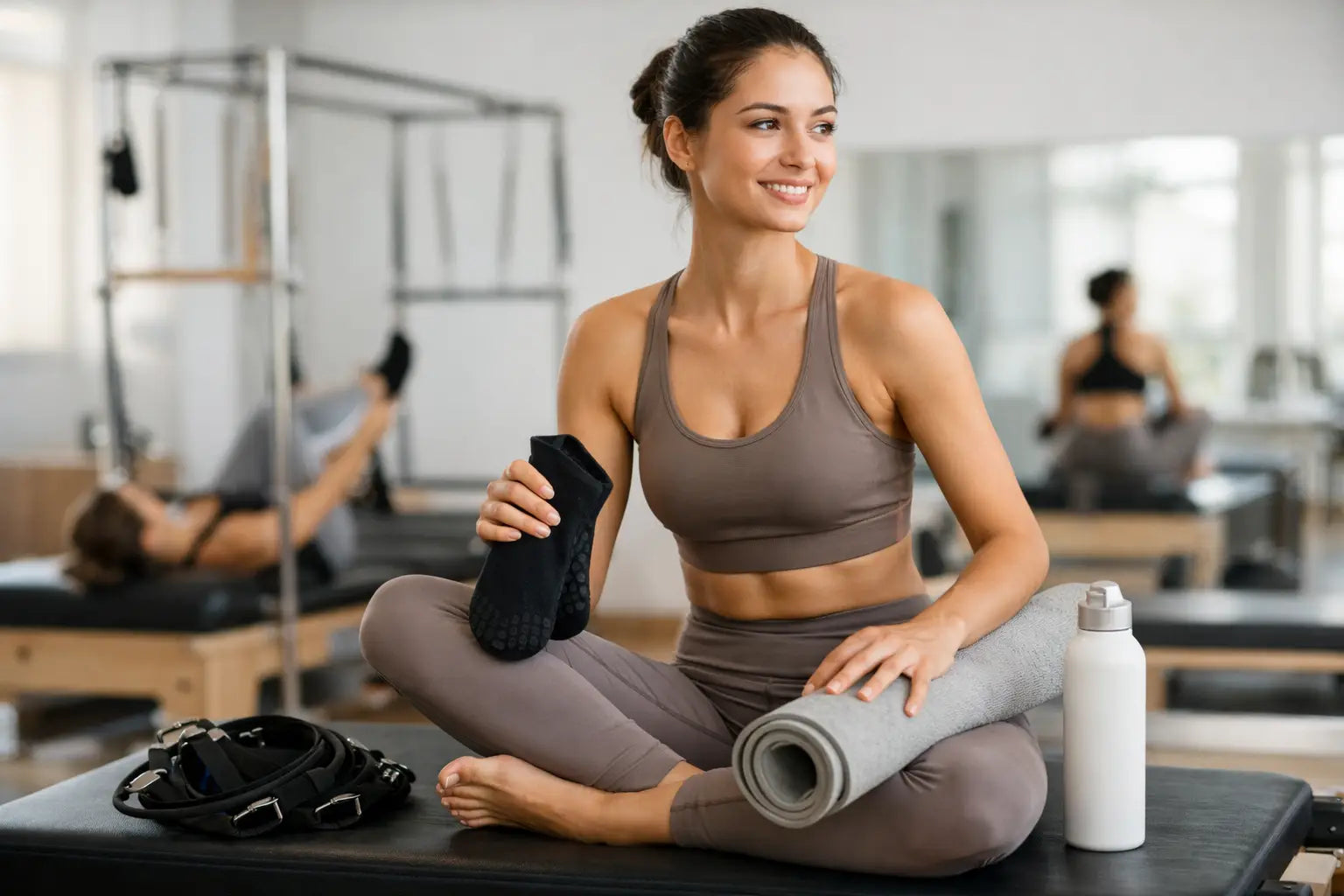
If you are attending a reformer class, grippy socks are often essential. Many studios require them for hygiene and safety, and they help you feel more stable on the machine. Standard socks are not always enough, especially if the footbar or carriage feels slippery.
For mat Pilates, it depends on the studio and your own preference. Some people go barefoot, some prefer grippy socks, and others like a light sock for warmth. Trainers are generally not worn during the class itself.
Hair ties, minimal jewellery and a water bottle are the little things that make a difference too. Long necklaces, chunky earrings and stacks of bracelets can get in the way surprisingly fast. Pilates is controlled, but there is still enough movement that less is more.
What not to wear to Pilates class
If you are deciding what to wear Pilates class for the first time, it can be just as helpful to know what to avoid. Anything too loose can ride up, fall down or make it harder for your instructor to check your form. Very old leggings with thin fabric are risky, and tops with awkward straps or poor support tend to become annoying within minutes.
Cotton-heavy pieces can also be less comfortable than technical activewear. Even in lower-impact sessions, you can still warm up quickly, and fabrics that hold sweat do not feel as fresh or flattering. Pilates might look graceful, but your outfit still needs to perform.
The same goes for anything you need to keep adjusting. If you are pulling up your waistband, fixing your neckline or stepping on flared hems, the fit is wrong for the class. Good activewear should let you focus on the workout, not your clothes.
Dressing for mat Pilates vs reformer Pilates
Mat and reformer Pilates need largely the same approach, but there are a few small differences. For mat classes, comfort and stretch are the main priorities. You will be rolling on the floor, moving through sequences and spending time in positions where softer fabrics can feel especially good.
For reformer classes, fitted clothing becomes even more important. You do not want loose fabric catching on springs or bunching awkwardly against the carriage. Grippy socks are more likely to be required, and smooth leggings with a clean, sculpted fit tend to feel best.
In both cases, the sweet spot is stylish, body-skimming activewear that supports movement and looks elevated from every angle.
Build a Pilates outfit that feels like you
There is no single uniform, and that is part of the appeal. Some women feel strongest in an all-black set with a sleek zip jacket. Others prefer soft neutrals, rich seasonal shades or a matching co-ord that makes the whole look feel intentional. The most flattering Pilates outfit is the one that gives you support, comfort and confidence the moment you put it on.
If you are building from scratch, start with high-waisted leggings, a supportive bra and one great fitted layer. Choose quality over clutter. A few well-cut pieces in premium fabric will always work harder than a drawer full of activewear that almost fits.
Pilates is about controlled movement, strong posture and feeling connected to your body. Your outfit should do the same job - supportive, flattering and quietly powerful. If you feel good in what you wear, you will carry that energy into every class.